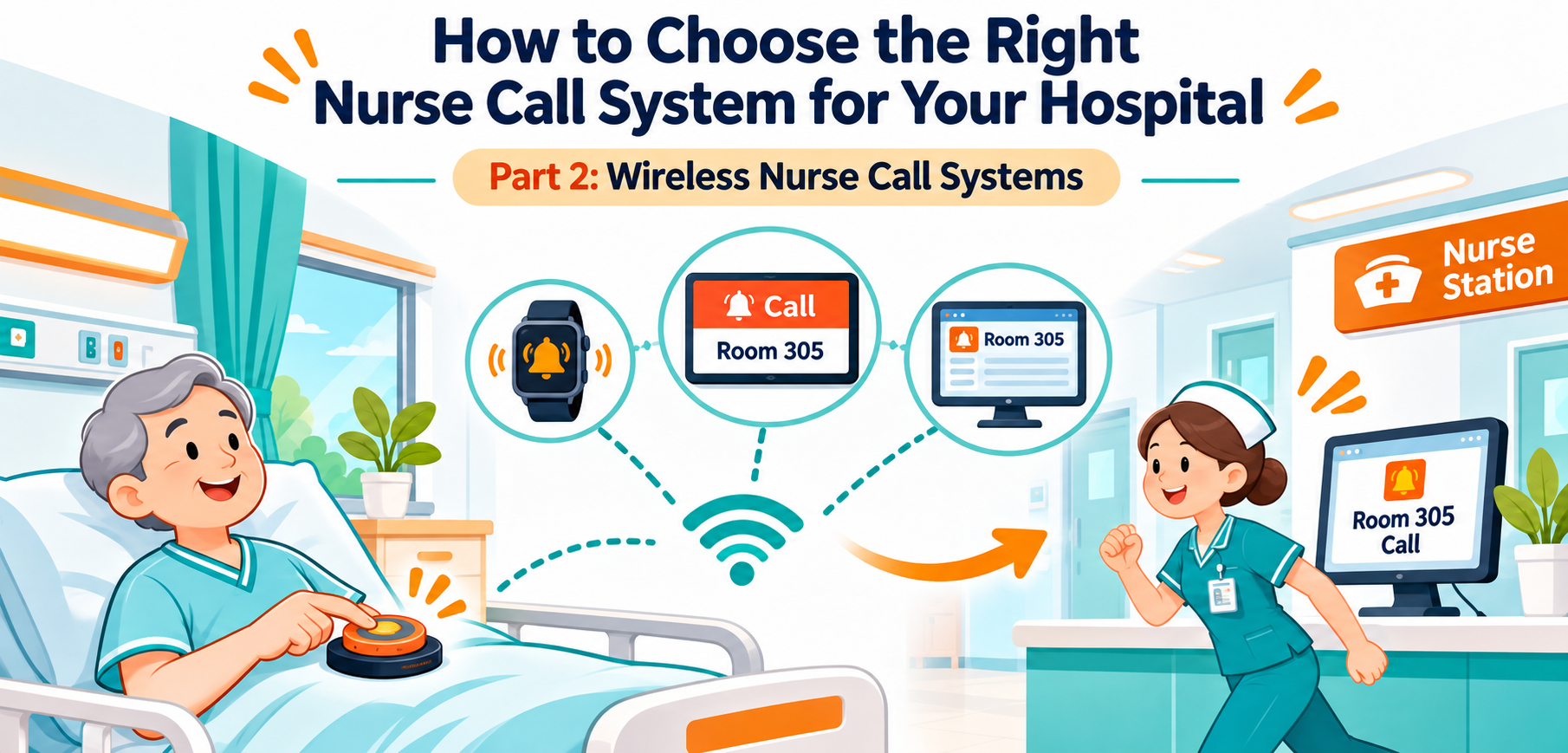
How to Choose the Right Nurse Call System for Your Hospital,Part 1: Wireless Nurse Call Systems
A Practical Guide for Hospitals, Healthcare Facilities, Purchasing Managers and System Integrators. Choosing a nurse call system is an important decision for any hospital or healthcare facility. Patients need a simple way to request assistance, while nursing staff need to know which room or bed is calling. The system should also be easy to manage, reliable in daily use, and suitable for the building's layout.
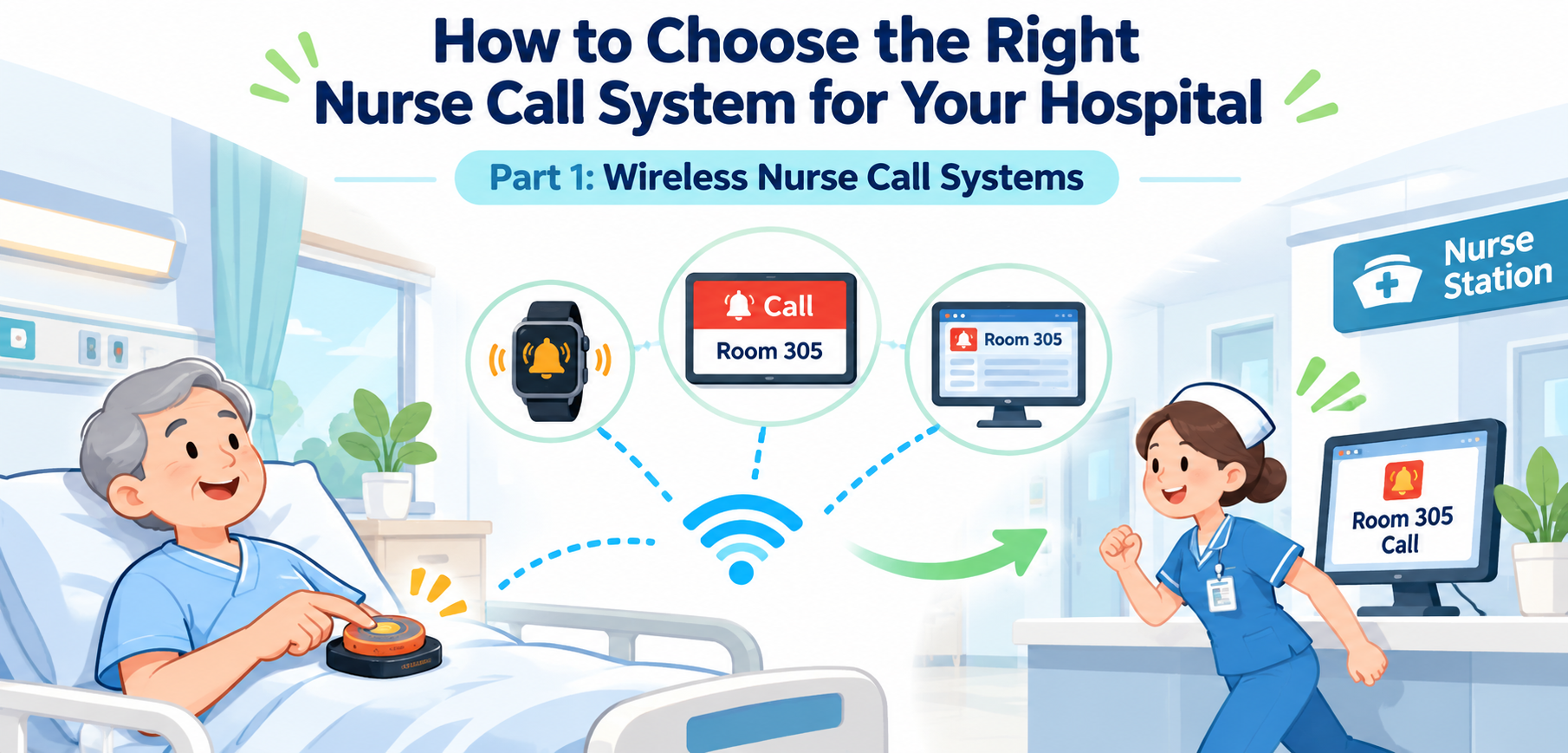
Part 1: Wireless Nurse Call Systems — Features, Costs, Installation & Buying Guide
A Practical Guide for Hospitals, Healthcare Facilities, Purchasing Managers and System Integrators
Choosing a nurse call system is an important decision for any hospital or healthcare facility.
Patients need a simple way to request assistance, while nursing staff need to know which room or bed is calling. The system should also be easy to manage, reliable in daily use, and suitable for the building's layout.
However, not every hospital needs the same type of nurse call system.
A small hospital with 30 beds may have very different requirements from a large hospital with several buildings. A new hospital under construction can install communication cables more easily than an existing hospital that wants to add beds without interrupting patient care.
The good news is that there are several nurse call technologies available.
In this guide, we will explain the main system types and focus on FSK wireless nurse call systems, including their benefits, equipment options, costs, installation requirements, and important things to check before purchasing.
If you are planning a hospital renovation, adding patient rooms, or looking for a practical nurse call solution, this article will help you understand your options.
1. What Types of Nurse Call Systems Are Available?
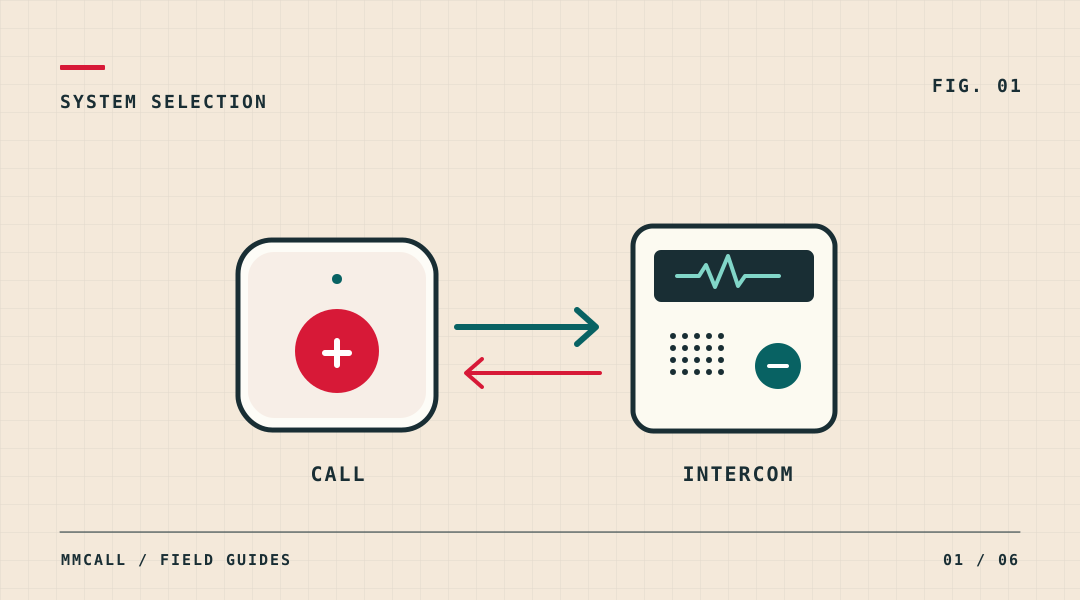
Before choosing equipment, it is important to understand the difference between a nurse call system and a nurse intercom system.
A nurse call system allows patients to send a request for assistance.
A nurse intercom system allows patients and nursing staff to communicate through voice.
These are different functions, and the right choice depends on what your facility needs.
Type 1 — Wireless Nurse Call System
Button Calling Without Voice Communication
This type of system uses wireless patient call buttons to send information to the nursing station or other receiving devices.
When a patient presses a button, the system identifies the room or bed and notifies nursing staff.
Depending on the configuration, staff can receive calls through:
- LED display receivers
- Nursing station controllers
- Wireless staff watch pagers
- Computer management software
- Room door indicator lights
FSK wireless calling systems are a common option for this type of application.
Best for: Facilities that need patient calling and staff notifications without two-way voice communication.
Type 2 — WiFi Wireless Nurse Intercom System
Wireless Calling with Two-Way Voice
A WiFi nurse intercom system uses compatible voice terminals and a suitable WiFi network.
Patients can call the nursing station and speak directly with nursing staff.
For example, after receiving a call from Room 203, a nurse can answer through the intercom and ask the patient what assistance is needed.
This can be useful when staff need more information before visiting the room.
Best for: Facilities that require two-way voice communication and have suitable WiFi network infrastructure.
Type 3 — Wired Nurse Call or Intercom System
Communication Through Installed Cables
Wired systems connect patient rooms and nursing stations through communication cables.
Some wired systems provide basic button calling and call notifications. Other wired systems also support two-way voice intercom.
They are often considered for new construction projects or facilities where suitable communication wiring is already available.
Best for: Projects where a wired communication system is required, planned, or preferred.
Which Type Should You Choose?
If patients only need to press a button to request assistance, a basic wireless nurse call system may be enough.
If patients and nurses need to speak directly, consider a WiFi or compatible wired voice intercom.
If the hospital has special safety, integration, or regulatory requirements, the system architecture must be selected accordingly.
This article focuses on the first option: FSK wireless nurse call systems without voice communication.
We will discuss WiFi nurse intercoms and wired systems in separate guides.
2. What Is an FSK Wireless Nurse Call System?
A Simple Way to Connect Patients and Nursing Staff
An FSK wireless nurse call system uses radio communication to send call information from patient devices to receiving equipment.
FSK stands for Frequency Shift Keying, a method of sending digital information through radio signals.
In a typical MMCall system, a wireless bedside button sends a call signal to a compatible receiver or system controller.
The receiving system identifies the calling device and displays the registered room number, bed number, or call type.
For example:
A patient in Bed 12 presses the bedside button.
The nursing station receiver displays:
Bed 12 — Nurse Call
A nurse wearing a compatible watch pager may also receive the message.
The nurse can then go to the patient's bed to provide assistance.
Basic System Structure
Wireless Bedside Call Button → FSK Wireless Receiver → Nursing Station Display
Additional receiving devices can be added according to the system configuration.
For example:
Wireless Call Buttons → CA / CN Controller → LED Display + Staff Watch Pagers + Management Software
Does an FSK Wireless Nurse Call Button Support Voice Communication?
In the basic system described here, no.
The button sends a calling signal or selected call information. It does not provide a voice conversation between the patient and the nurse.
If two-way voice communication is required, a compatible nurse intercom system should be considered.
This is one of the most important differences to understand before purchasing.
3. Which Hospitals Should Consider Wireless Nurse Call Systems?
A Practical Option for Facilities That Want Less Wiring
Wireless nurse call systems are especially worth considering when installing new communication cables would be difficult, expensive, or disruptive.
Here are several common situations.
Small and Medium-Sized Hospitals
For hospitals with a limited number of rooms and beds, a basic wireless call system may provide the calling and notification functions needed for routine patient assistance.
A simple configuration may include bedside call buttons, a nursing station receiver, and staff watch pagers.
Facilities can also add compatible display screens or software if they need additional functions.
Existing Hospital Renovations
Renovating an occupied hospital can be difficult.
Installing new cables may require opening walls, working above ceilings, moving furniture, or closing rooms temporarily.
A wireless system reduces the need for dedicated signal wiring to each bedside call point.
This can make installation easier in selected renovation projects.
Adding New Patient Rooms or Beds
A hospital may want to add more patient beds without replacing its entire communication system.
With a compatible wireless system, additional call buttons can be registered and assigned to new beds.
However, receiving capacity and signal coverage should be checked before expansion.
Temporary Wards and Flexible Care Areas
Some hospitals use temporary care spaces or change room arrangements according to demand.
Wireless calling devices can be useful when call points may need to be installed or relocated without extensive cabling work.
Facilities with Limited Installation Time
For smaller and straightforward projects, installation and configuration may be completed relatively quickly.
An experienced installation team may be able to complete a basic wireless nurse call system in approximately one to two days, depending on the number of devices, building layout, preparation, and site conditions.
This is an example for suitable small installations, not a guaranteed installation time.
Larger facilities, complex wireless coverage, software integration, and required inspection or approval may take longer.
Hospitals Looking to Control Project Costs
In some projects, an FSK wireless system can cost less to install than a fully wired system because it requires less dedicated communication cabling and related construction work.
However, the total project cost also depends on receivers, repeaters, software, batteries, maintenance, testing, and regulatory requirements.
A wireless system is not automatically the lowest-cost solution for every hospital.